
Recovery-Focused Training Principles for Former Athletes Over 40
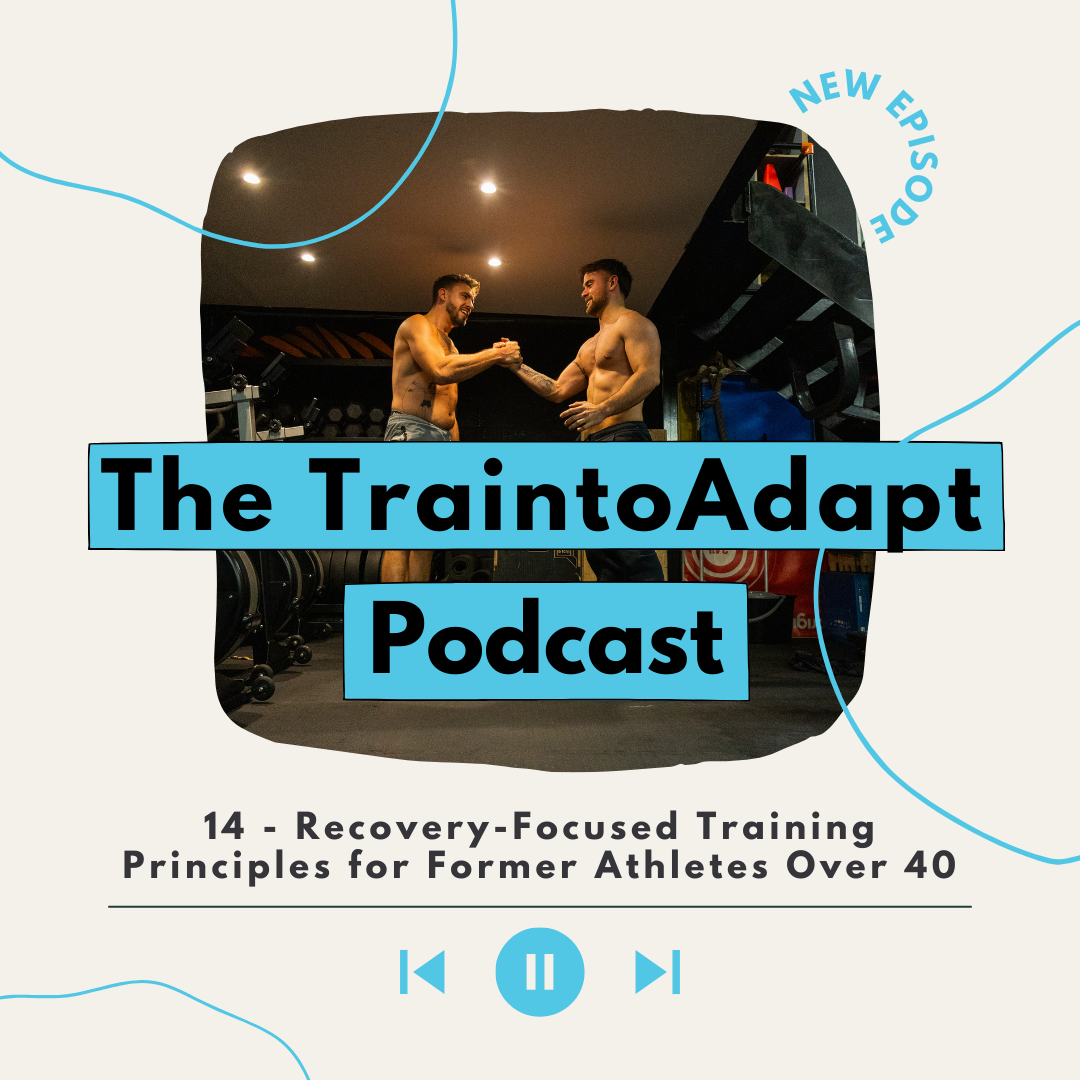
In this episode of the Train to Adapt Podcast, Adam Shergold and Kaeden Stander explore what really happens to recovery after 30 — and why workouts that once felt manageable suddenly require more time and strategy.
Key insights include:
-
After 30, testosterone and growth hormone decline 1–2% per year, slowing muscle repair and increasing recovery needs.
-
The same session that once required 24 hours of recovery can now require 48–72 hours.
-
Deep sleep phases shorten, and cortisol remains elevated longer, making stress management more important than ever.
-
Different sports leave long-term movement patterns, such as shoulder strain in swimmers or hip restrictions in runners.
-
Active recovery often works better than complete rest after 40, helping maintain blood flow without adding strain.
-
Protein timing is critical: 20–30 grams post-workout, as muscle protein synthesis declines with age.
-
Tracking tools like heart rate variability and sleep monitoring help guide smarter recovery decisions.
-
The biggest shift is mental — redefining success from peak performance metrics to sustainable energy, strength, and longevity.
The takeaway is simple: this isn’t decline, it’s recalibration. Athletic performance doesn’t disappear after 30 — it evolves. With smarter programming, better recovery, and a new definition of progress, long-term performance is not only possible, but it’s also sustainable.